
Page 39 - Gellin & Borgstrøm

Go to content

Page 39

Gellin & Borgstrøm

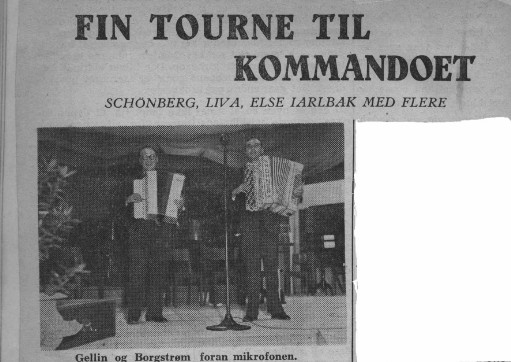
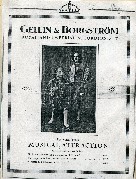
During the mid to late 30's they were busy touring both Denmark and other european countries and also found time to record several selections, especially songs that were current at the time.

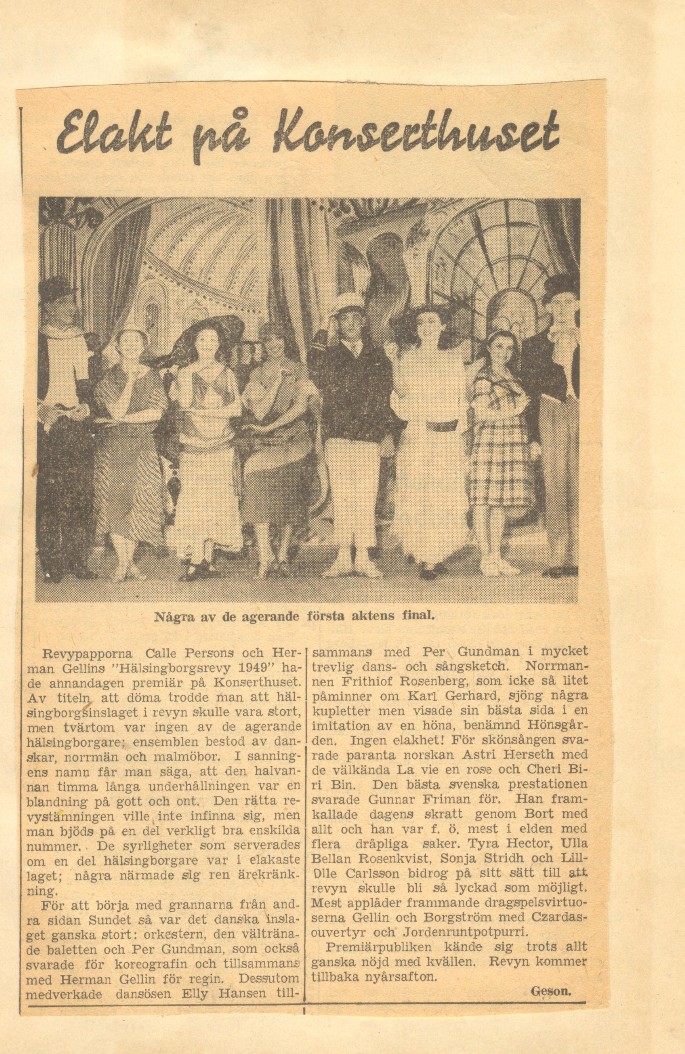
Gellin & Borgstrøm had appeared in Cirkusrevyen every year from 1935 -1941, and then again 1948-1950.
In the years between 1941 and 1946 they performed in two other very popular revues:
Helsingør Revyen 1943, 1944, 1945.
Fællesrevyen 1946.
The 2nd world war put a stop to touring and most of their performances were restricted to Copenhagen and nearby areas.

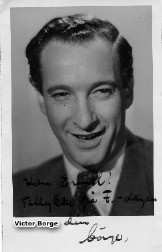
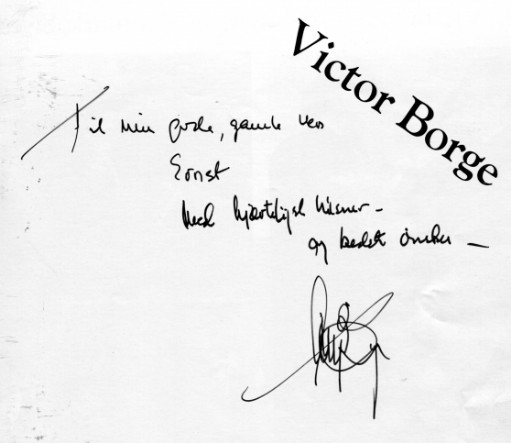
In 1939 Cirkusrevyen after the season had ended, it was was transferred to Copenhagen as a start for the Gellin & Borgstrøm tour featuring 3 of stars from the Revue: Ellen Jansø, Carl Fischer and Victor Borge, with Oscar Holst as the MC.

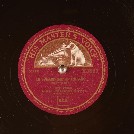
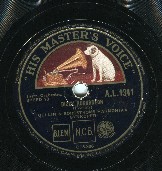
"Tiger Rag"
Composer La Rocca
Arranged by P. Frost
Recorded 1938 by
Gellin & Borgstrøm with ensemble
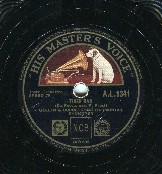
"Dizzy Accordion"
Composer: Pietro Frosini
Recorded 1938  by
Gellin & Borgstrøm
with
Ensemble
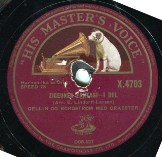
" Zigeuner Fantasie" part 1 & 2
Arranged by Lindorff-Larsen
Recorded 1936 by
Gellin & Borgstrøm
with the Lindorff-Larsen orchestra
Scenes from "Cirkusrevyen" 1936

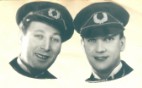
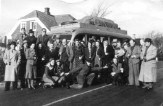
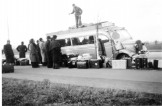
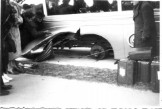
In 1940, after Cirkusrevyen  had finished in Bakken, it went on tour, but not always without problems. The bus broke down as the pictures show.
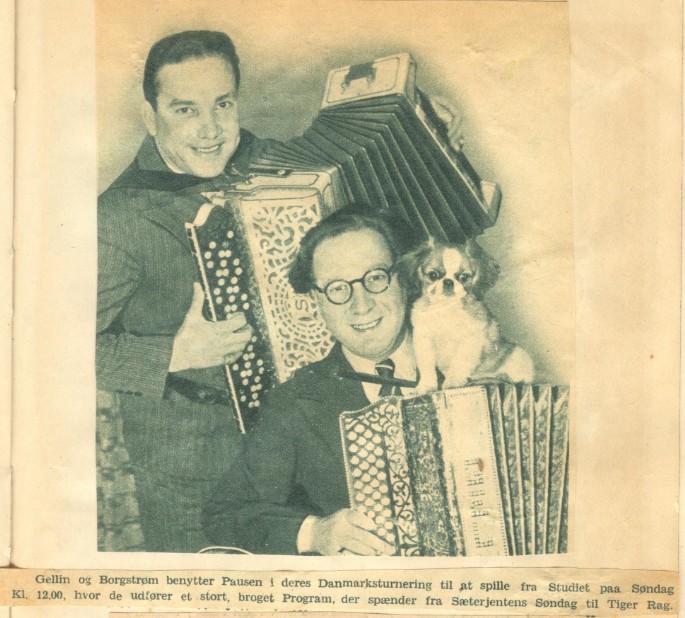
Gellin and Borgstrøm utilize the break in their Tour of Denmark to play from the Radio Studio at 12:00 noon, where they present a large, varied program that spans from Ole Bull's "Sæterjentens Søndag" (The dairymaid's Sunday) to "Tiger Rag".

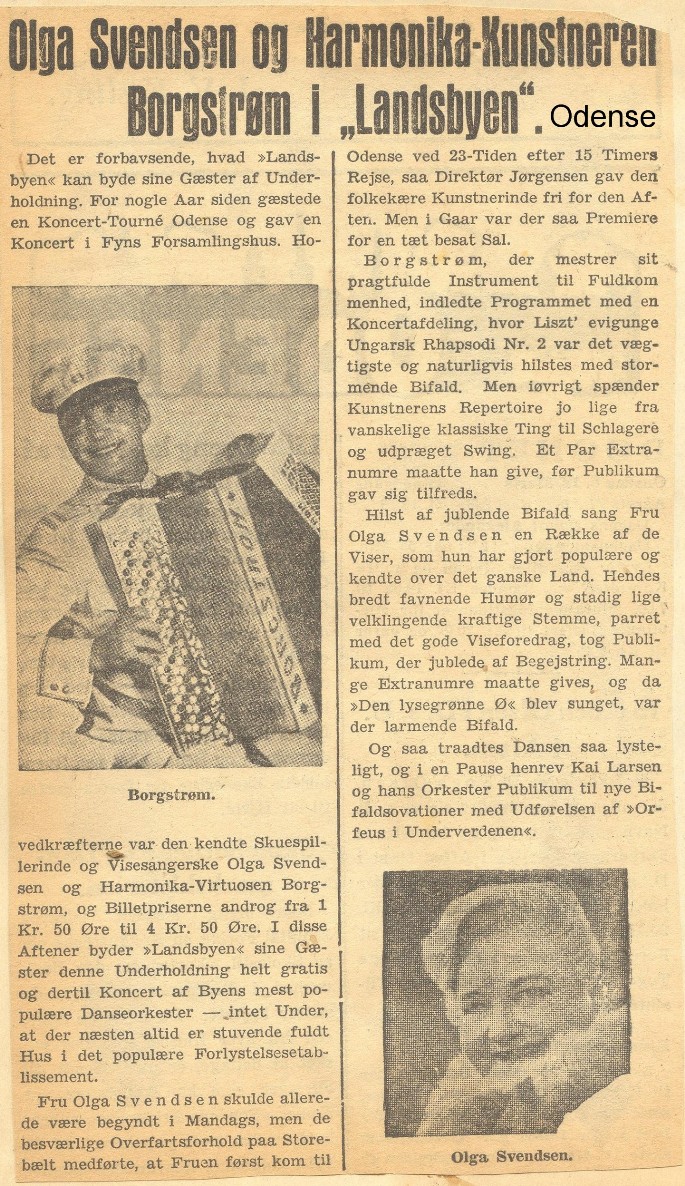
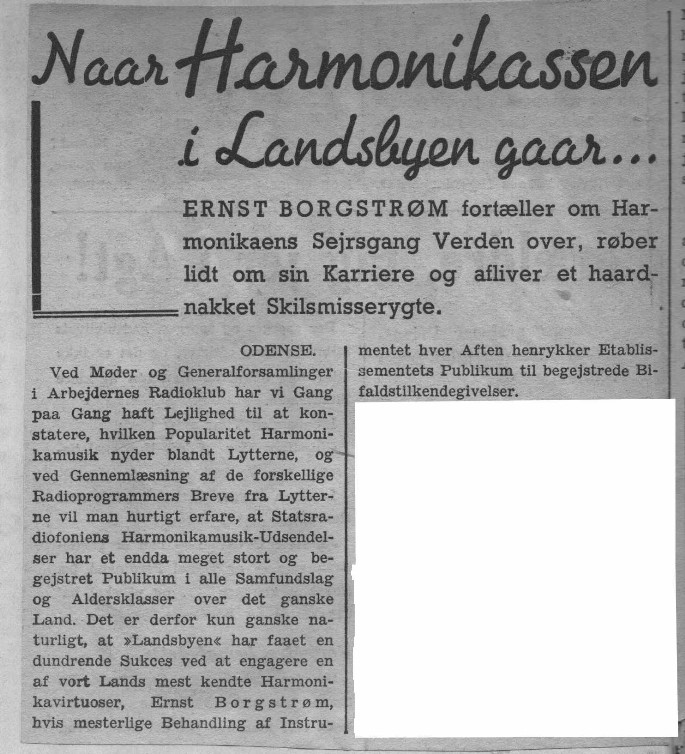
   Partial Translation
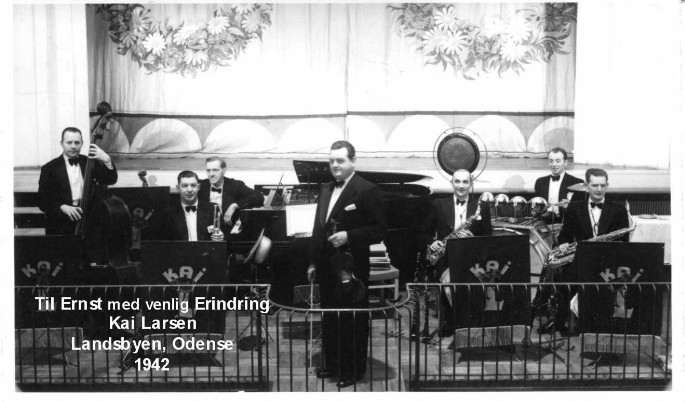
From Olga Svendsen and accordion artist Borgstrøm in "Landsbyen" in Odense

Borgstrøm, who masters his magnificent instrument to perfection, opened the program with a concert department where Liszt` eternal youthful Hungarian Rhapsody No.2 was the heaviest and of course was greeted with thunderous applause. But otherwise the artist's repertoire ranges from the classic difficult thing to popular tunes and pronounced swing.
He had to give a few encores before the audience was satisfied.
Greeted by cheering applause,  Mrs. Olga Svendsen sang some of the songs she has made popular and known all over the country. Her widely embraced mood and still well sounding strong voice, combined with the good showstyle, captured the audience, who cheered in delight. Many extra numbers had to be given, and when "The Light Green Island" was sung, there was enormous applause.
During intermission new ovations came as Kai Larsen as his orchestra played "Orpheus in the Underworld".


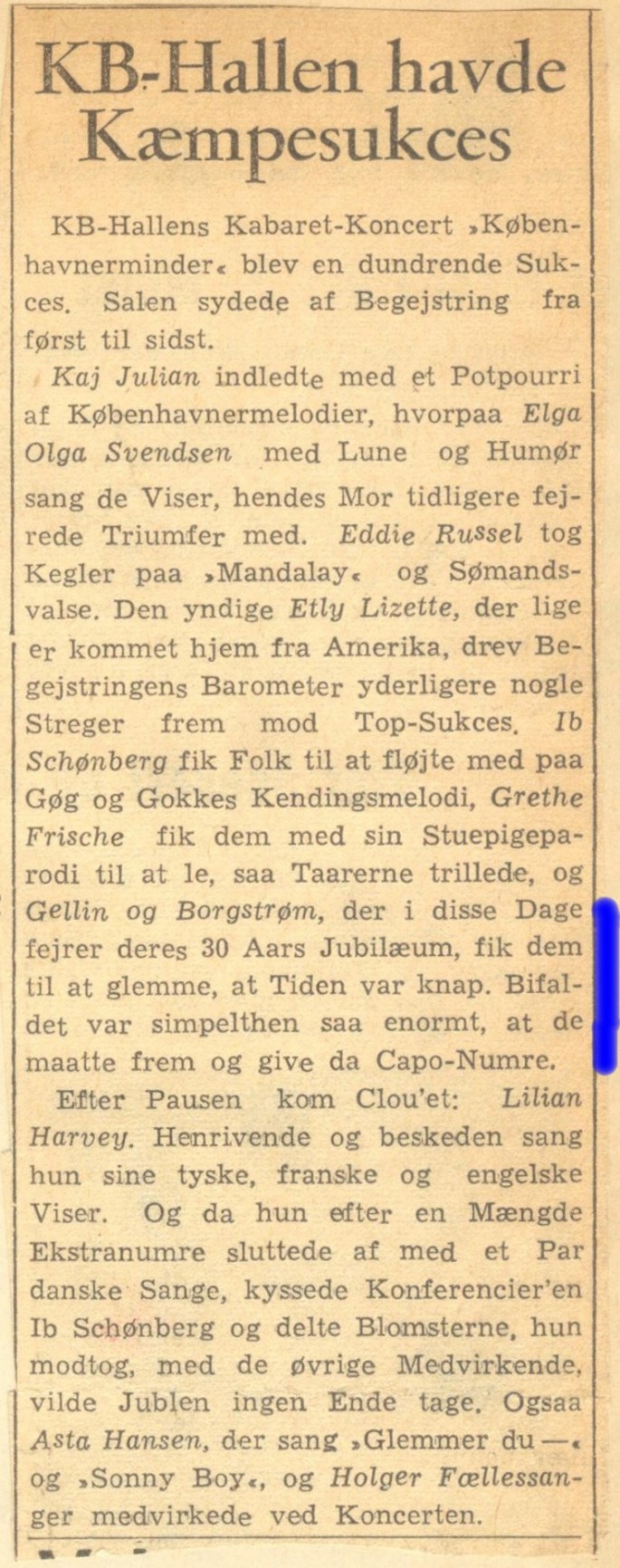
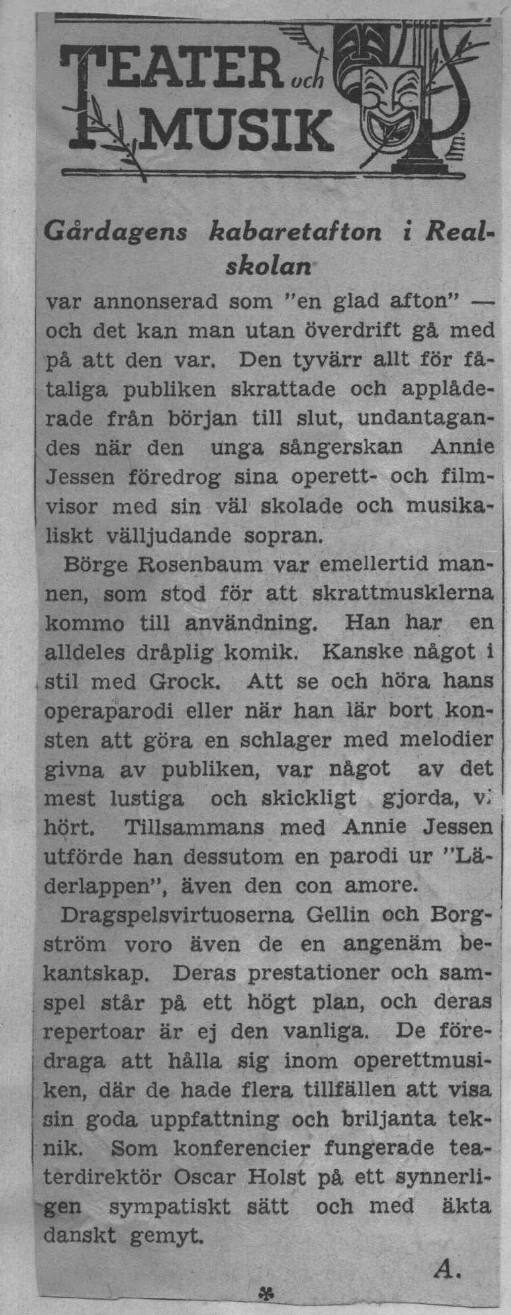
Yesterday's cabaret evening was advertised as -"A happy evening"- and one without exaggeration, had to agree with them.
 
 
The Audience laughed and applauded from the beginning till the end, except when the young singer Annie Jessen presented her operetta and film songs with her well-trained and musically sounding soprano voice.
 
 
Børge Rosenbaum (Victor Borge) was however the man who gave the laughing muscles a workout. He is an absolutely hilarious comedian. To see and hear his opera parody or when he demonstrates the art of making pop songs with melodies given by Audience, was one of the most hilarious and deftly crafted, we heard. Along with Annie Jessen, he performed additionally a parody of 'Länderlappen'- in 'con amore' style.
 
 
Accordionvirtuosos Gellin and Borgström were also a pleasant aquantance. Their presentations and interaction is on a high plane, and their repertoire is not the usual. They prefer to stay within the operetta music, where they had several opportunities to show their good interpretations and brilliant technique.
 
As Master of Ceremony Oscar Holst worked in an extremely likable manner and genuine Danish joviality.
Aksel Schiøtz huskes for sin fortolkning af danske sange og Schuberts og Schumanns lieder, samt sange af Carl Michael Bellman. Under den nazistiske besættelse af Danmark (1940-1945) opnåede han stor popularitet for sine indspilninger af traditionelle danske sange fra det 19. og begyndelsen af ​​det 20. århundrede.

Da nazisterne invaderede Danmark, afslog Schiøtz anmodninger om at synge tyske lieder, da han indså, at sådanne opførelser ville blive brugt til tysk propaganda. Han sang i stedet dansk musik, både kunstsange og folkemusik, og hans forskning bidrog betydeligt til mængden af ​​udgivne danske sange. Udover at opretholde sin sangkarriere blev Schiøtz aktiv i modstandsbevægelsen, et valg, der førte til, at han blev slået til ridder af Kong Christian X i 1947.

Aksel Schiøtz' lyriske og følsomme fortolkning af danske sange og hans perfekte beherskelse af det danske sprog resulterede i en evig gave til det danske folk.


Schiøtz is remembered for his interpretation of Danish songs and Schubert's and Schumann's lieder, as well as songs by Carl Michael Bellman. During the Nazi occupation of Denmark (1940–1945), he achieved great popularity for his recording of traditional Danish songs of the 19th and early 20th centuries.
When the Nazis invaded Denmark, Schiøtz refused requests to sing German lieder, realizing that such performances would be used for German propaganda. He sang, instead, the music of Denmark, both art songs and folk music, his research significantly adding to the store of published Danish song. In addition to maintaining his singing career, Schiøtz became active in the Resistance, a choice which led to his being knighted by King Christian X in 1947.
Aksel Schiøtz's lyrical and sensitive interpretation of Danish songs and his perfect command of the Danish language resulted in an everlasting gift to the Danish people.


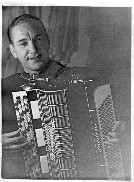
Ernst Borgstrøm
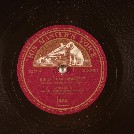
Den Er Fin Med Kompasset
Aksel Schiøtz
Ernst Borgstrøm
Recorded around 1940

En Sømand Har Sin Enegang
Aksel Schiøtz
Ernst Borgstrøm
Recorded around 1940


Back to content